A glass of water can look perfectly clear and still leave you wondering whether everything is as it should be. Perhaps the bathroom sink has developed orange marks, the kitchen tap has an unusual taste, or you’ve recently moved into an older house and aren’t sure about its plumbing. These little clues can raise big questions, especially when your family relies on the same water every day.
The tricky part is that water problems don’t all have the same cause. Some are mainly cosmetic, while others deserve prompt investigation. Knowing what to look for, when to arrange testing, and which treatment options may help can save you money and give you greater confidence in your home’s water supply.
Understanding the Signs Around Your Home
Water often leaves clues behind, although those clues don’t always tell the whole story. White crust around faucets may be associated with hard water, while reddish marks in sinks or bathtubs can indicate iron in the supply. A metallic taste may have several causes, including plumbing materials, and a sudden change in odor could point to a problem that needs further investigation.
Pay attention to patterns. Do stains appear in every bathroom, or only at one faucet? Does the water look different after plumbing work? Are the marks becoming more noticeable over time? These observations can help a professional narrow down possible causes.
Still, appearance isn’t a reliable safety test. Some contaminants have no obvious color, taste, or smell. If you suspect a problem, testing is a better starting point than choosing a filter based on guesswork.
Why Iron and Rust Stains Appear
Orange, brown, or reddish marks on sinks, laundry, and shower surfaces can be frustrating. You clean the bathroom, everything looks fine, and a few days later those stains return. In some homes, dissolved iron in the water oxidizes when exposed to air, leaving colored deposits on surfaces. Rust from corroding plumbing components may also contribute.
Visible iron/rust stains don’t automatically mean the water is dangerous, but they can indicate an issue worth investigating. Iron can affect taste, discolor laundry, and create deposits in fixtures. Depending on the source, manganese may also cause dark staining.
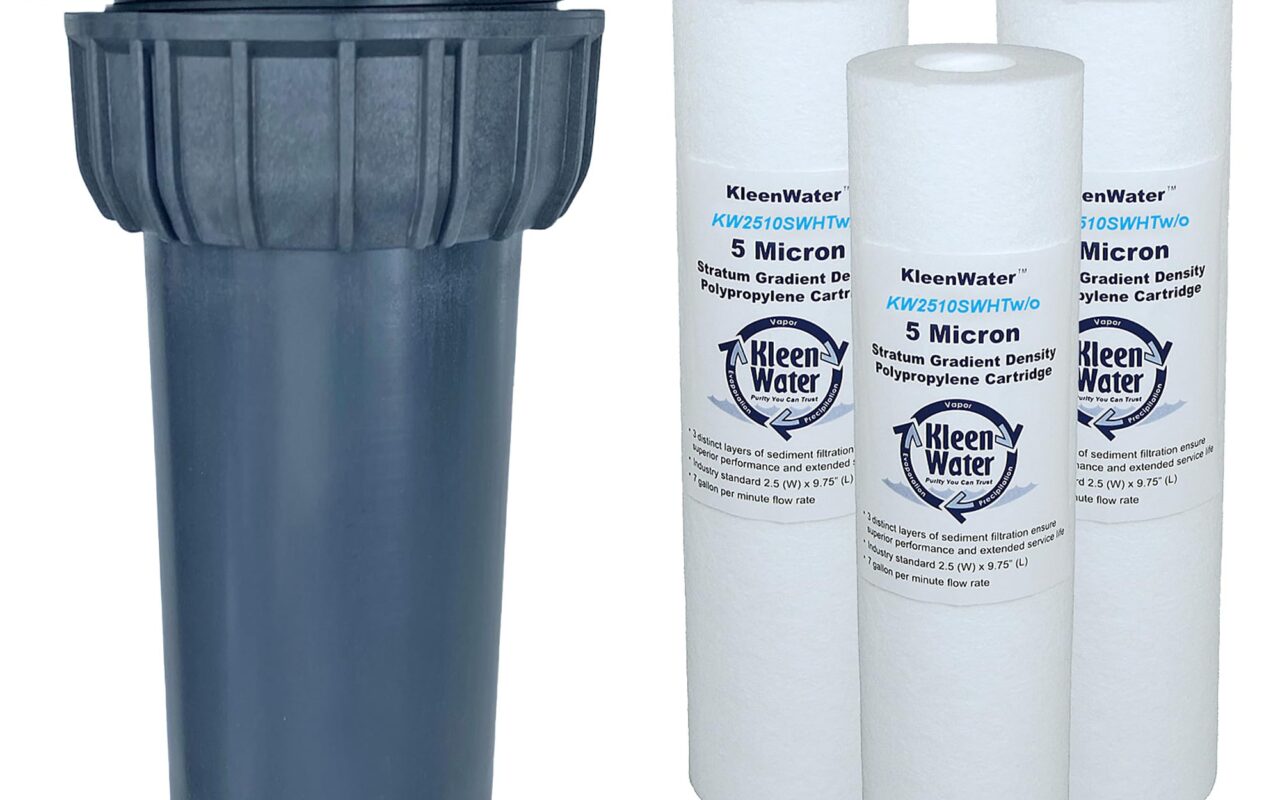
The right treatment depends on the form and concentration of the minerals. Some systems use oxidation followed by filtration, while others rely on specialized media designed for iron removal. A basic sediment filter may capture rust particles already suspended in water, but it won’t necessarily remove dissolved iron.
Testing helps determine which approach makes sense. If staining is limited to one fixture, the cause may be local plumbing rather than the entire water supply. A plumber or water treatment specialist can help distinguish between these possibilities before you invest in equipment.
PFAS: Contaminants You Can’t See
Not every water concern leaves a visible mark. Per- and polyfluoroalkyl substances, commonly known as PFAS, are a large group of manufactured chemicals used in various industrial and consumer applications. Some have been used in products designed to resist heat, water, oil, and stains.
Certain PFAS can persist in the environment and may enter groundwater through industrial releases, firefighting foam, landfills, and other sources. Exposure has been associated with several health concerns, although the risks depend on the specific chemical, exposure level, and duration.
One reason PFAS deserve attention is that ordinary household observation cannot establish whether they’re present. Water may look, smell, and taste completely normal. If your local area has known contamination concerns, consult public health guidance and review available water testing information.
Some treatment technologies, including appropriately certified activated carbon filters and reverse osmosis systems, can reduce particular PFAS. However, performance varies by product and compound. Look for verified reduction claims covering the specific substances of concern, and follow cartridge replacement instructions carefully. An untested filter should not be assumed to provide adequate protection.
If testing identifies PFAS in your supply, use local health authority recommendations to decide on the next steps. The most useful response is based on reliable results rather than frightening headlines or broad marketing promises.
Older Plumbing and the Risk of Lead
In older homes, the plumbing itself may be part of the problem. Some older service lines, solder, and plumbing components contain lead, which can enter water as it travels through the system. Corrosion conditions, water chemistry, and the materials used in the plumbing all influence the amount that may be released.
Concerns involving lead/aging pipes deserve particular attention because lead exposure can harm health, and children are especially vulnerable. There is no known safe level of lead exposure in children. Water containing lead may still look and taste entirely normal, so visual inspection alone cannot confirm whether a supply is safe.
If you live in an older property, ask your water supplier about service-line materials and arrange appropriate testing when recommended. A certified laboratory can analyze a properly collected sample. Testing instructions matter because the way water is sampled can affect the results.
Depending on local conditions, a certified point-of-use filter designed to reduce lead may be a useful interim measure. Check that the product is specifically certified for lead reduction, maintain it according to instructions, and understand that a filter doesn’t replace the need to address a contaminated plumbing line. Where lead is confirmed, consult qualified plumbing professionals and local health authorities about remediation.
Choosing the Right Water Treatment
Once testing identifies the problem, you can compare suitable solutions. Different technologies serve different purposes, and no single system removes every contaminant.
Sediment filters capture suspended particles. Activated carbon can improve taste and odor and reduce certain chemicals when the equipment is designed for them. Reverse osmosis systems reduce many dissolved substances, while specialized oxidation and filtration systems may help with iron and manganese. Water softeners mainly address hardness minerals rather than lead, PFAS, or microorganisms.
Read product specifications carefully. Independent certifications can help verify performance, but the exact contaminant reduction claim matters more than a general statement that a product improves water. Also consider flow rate, replacement cartridge costs, installation requirements, and the availability of replacement parts.
For more complex problems, professional advice can be valuable. A qualified specialist should explain the test results, recommend equipment that matches the identified issue, and outline ongoing operating costs. Be cautious of anyone who insists that you need an expensive system without providing a clear explanation or evidence.
Don’t Forget Regular Testing and Maintenance
Water conditions can change, and treatment equipment doesn’t remain effective forever without care. Filters have limited service lives, membranes need replacement, and some systems require cleaning or periodic performance checks. Skipping maintenance can reduce treatment effectiveness even when the equipment appears to be working normally.
Keep a record of test results, installation details, and filter replacement dates. If your water source changes, nearby contamination is reported, or you notice a sudden change in appearance or smell, investigate rather than assuming the existing equipment will handle it.
Private well owners should follow local testing recommendations, especially after flooding, repairs, or other events that could affect the water supply. Households connected to public systems can review annual water quality reports while remembering that problems inside a property’s plumbing may require separate investigation.
A Clearer Picture Starts With Knowing More
Stains, unusual tastes, and aging pipes can all raise questions, but guessing rarely provides the best answer. Start by observing what has changed, learn about your water source, and arrange appropriate testing when needed. Then choose a treatment approach that addresses the actual problem.
Some issues may be relatively simple to manage, while others require professional assessment and plumbing repairs. Either way, understanding the difference helps you avoid unnecessary spending and focus on what matters. Clear water is reassuring, but reliable information is far more useful when it comes to protecting the water your household depends on.